Treatment
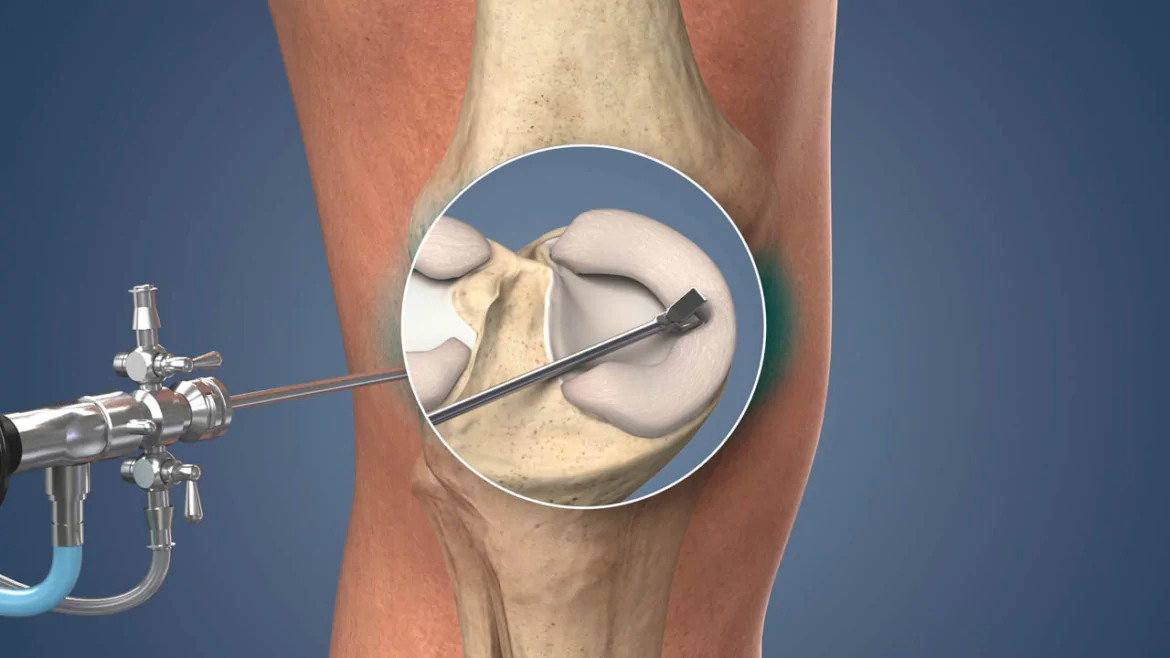
Meniscus Repair
Related Media
Meniscus Tears Overview
Anatomy
MRI scans show (Left) a normal meniscus and (Right) a torn meniscus. The tear can be seen as a white line through the dark body of the meniscus.
Images courtesy of Stuart J. Fischer, MD, FAAOS
- The meniscal roots (the attachments to the tibia in the front and back of the knee)
- The posterior horn (the back 1/3 of the meniscus)
- The body (the inner 1/3 of the meniscus)
- The anterior horn (the front 1/3 of the meniscus)
- The red-red zone
- The red-white zone
- The white-white zone
Illustration showing the three vascular zones of the meniscus: white-white (1), white-red (2), and red-red (3).
Reprinted from Laible C, Stein DA, Kiridly DN. Meniscal Repair. J Am Acad Orthop Surg. 2013;21(4):204-213. doi:10.5435/JAAOS-21-04-204
Illustration showing (Left to Right): bucket handle tear, degenerative tear, flap tear, and radial tear. Most tears are parallel within the fibers of the meniscus, except for radial tears, which are at a 90-degree angle to these fibers and are therefore more difficult to repair and heal. Flap tears within the white-white zone are often treated with partial meniscectomy ("trimming").
When Is Meniscus Repair Recommended?
Diseases & Conditions
Meniscus Tears
Treatment
Meniscal Transplant Surgery
Diseases & Conditions
Anterior Cruciate Ligament (ACL) Injuries
- In athletes, meniscal repair requires a longer recovery time before being cleared to return to play.
- However, meniscus repair provides greater long-term benefits by reducing the risk of early onset of osteoarthritis.
Preparing for the Procedure
Procedure
- Tears that occur in line with the parallel fibers within the posterior horn or body can be treated with an "all-inside repair"' or “inside-out repair” technique.
- Tears that are at a right (90 degree) angle to these fibers (i.e., radial tears) can also be treated with either of these techniques. However, if the “root” of the meniscus is torn, the surgeon may need to drill small bone tunnels through your shinbone to help anchor the “root” of the meniscus into place
Illustration showing a meniscus tear (Left) and repair of the tear using the all-inside technique (Right).
Recovery
Complications
- Damage to nerves and blood vessels around the knee
- Wound or knee joint infection
- Blood clots
- Knee stiffness
- Muscle weakness
- Need for additional surgery after failed repair or reinjury of the meniscus
Long-Term Outcomes
- The patient's age
- The patient's overall health
- The patient's activity level
- Commitment to physical therapy — patients who complete their prescribed physical therapy do better than patients who don’t
- Which surgical technique was used
- The type and location of the meniscus tear
- Overall patient health
- Alignment of the knee
- Cartilage health prior to surgery
- Return-to-sport rates after meniscus repair are reported to be approximately 91% and 95% after all-inside or inside-out repairs, respectively.
- Average time to return to play is 8 months post-surgery.
To assist doctors in the management of meniscus injuries, the American Academy of Orthopaedic Surgeons has conducted research to provide some useful guidelines. These are recommendations only and may not apply to every case. For more information: Clinical Practice Guideline - Acute Isolated Meniscal Pathology - AAOS
Related Media
Meniscus Tears Overview
Dr. Suresh Palsania
Orthopedic Surgeon · Sikar, Rajasthan