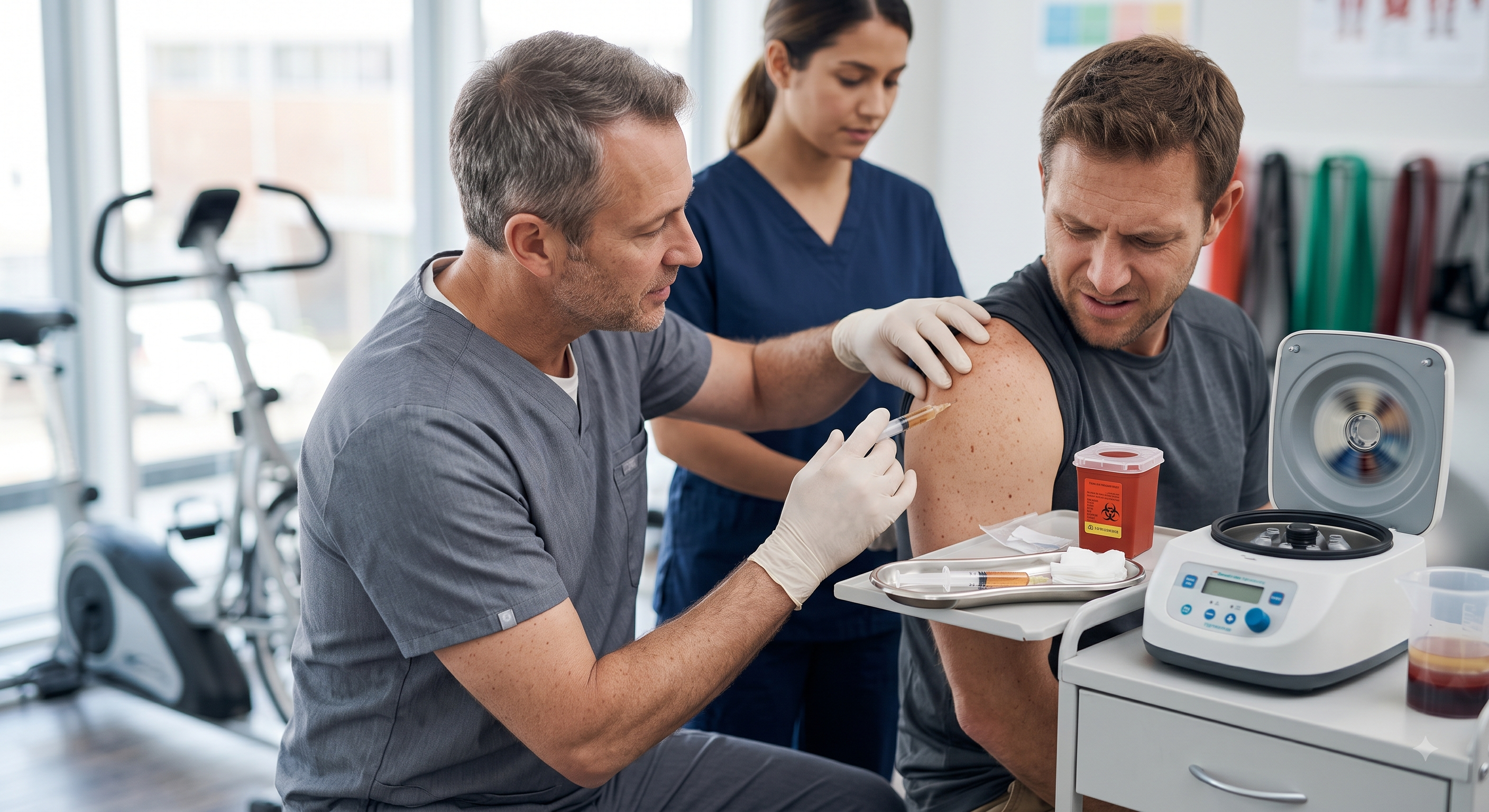
Regenerative Treatment for Sports Shoulder Injuries
Non-surgical, injection-based treatments help individuals with sports shoulder injuries and common shoulder conditions such as rotator cuff tears, shoulder arthritis, and labrum tears. These procedures use concentrated bone marrow stem cells, harvested from your own body, to promote natural healing without invasive surgery — ideal for athletes with chronic or sports-related shoulder pain.
Traditional treatments such as arthroscopic surgery or joint replacement require lengthy recovery and carry inherent risks. In contrast, precise, image-guided procedures help reduce pain, improve function, and speed recovery by using the body's natural ability to heal.
Conditions Commonly Treated
- Rotator cuff tears
- Shoulder arthritis
- Shoulder labrum tears
- Shoulder tendonitis and tendinosis
- AC joint separation
- Recurrent shoulder dislocations
- Sports-related shoulder fractures
How Regenerative Treatment Works
Using bone marrow stem cells harvested from your own body, regenerative therapy offers a non-invasive alternative to shoulder surgery for rotator cuff tears, labrum tears, arthritis, and other sports injuries. Precise, image-guided injections deliver your own stem cells and growth factors directly to the injured area, triggering the body's natural healing processes — offering faster recovery than traditional surgery and helping athletes return to sport sooner.
Frequently Asked Questions
Are regenerative therapies effective for shoulder injuries? Yes — they can be highly effective by reducing inflammation, promoting tissue repair, and improving function.
What are the success rates? Outcomes vary with individual factors and the specific injury, but many patients report significant improvements in pain and mobility. A consultation provides personalized insight.
What is recovery like? Recovery is generally much quicker than surgery, with less downtime and fewer risks.
Is everyone a candidate? Some individuals with severe tissue damage or specific medical conditions may not be suitable; a thorough evaluation is necessary.
Acute or chronic injuries? Regenerative treatments can benefit both acute injuries (strains and tears) and chronic conditions (tendonitis and arthritis).
Dr. Suresh Palsania
Orthopedic Surgeon · Sikar, Rajasthan