Non-Surgical Treatment for Spine & Back Pain
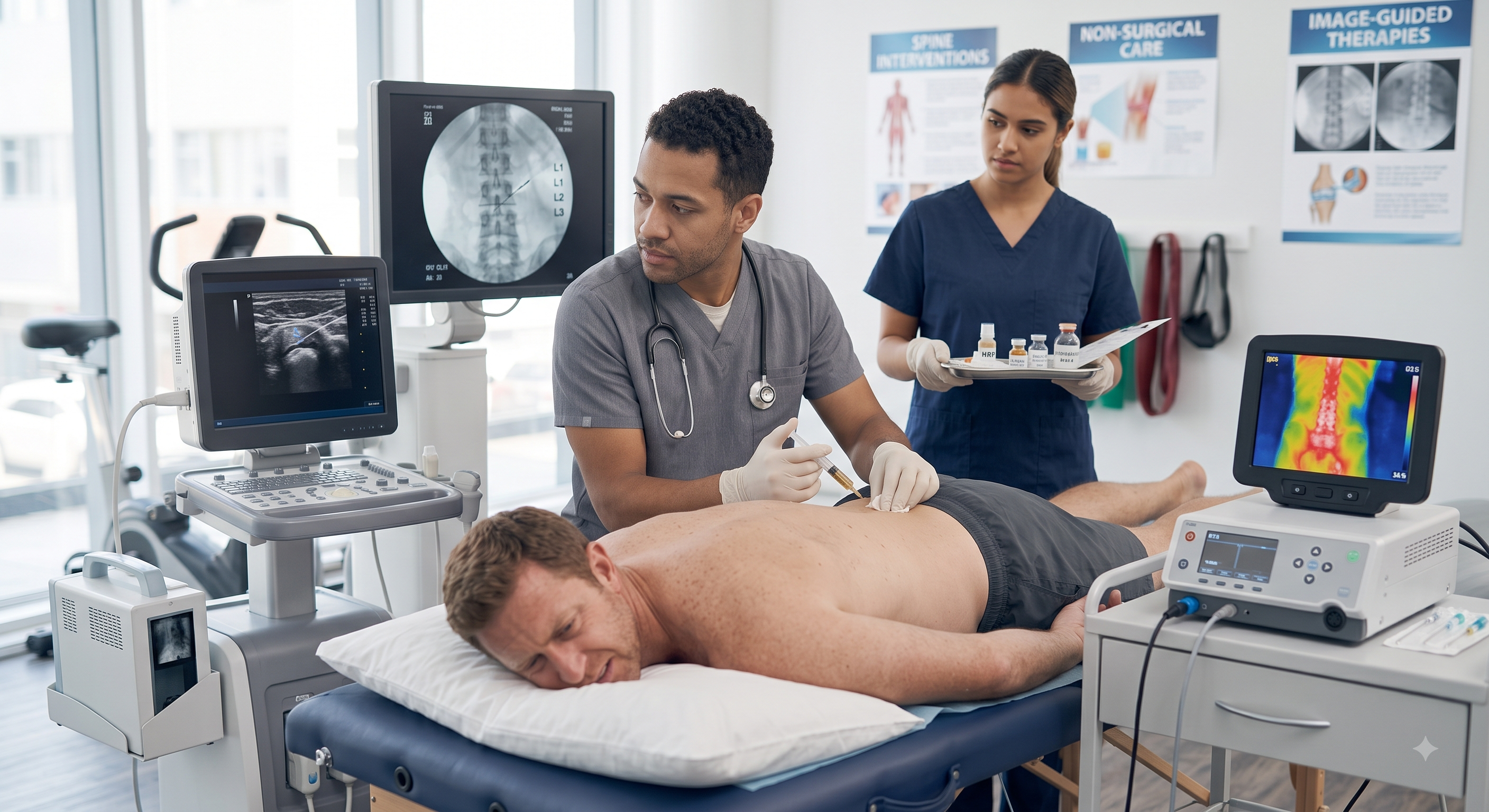
Regenerative therapies for back pain relief and improved function use minimally invasive, image-guided procedures. These methods stimulate natural healing to address damaged discs, ligaments, and spinal structures.
Finding the Root Cause
Back and neck discomfort frequently stems from multiple underlying factors. Proper diagnosis is essential, because misidentifying the source can lead to ineffective treatment or unnecessary surgery. A careful evaluation helps tailor the regenerative approach to each patient's specific needs.
Spine Conditions Commonly Treated
- Annular tears and disc extrusions
- Arthritis of the spine and bone spurs
- Bulging, collapsed, and herniated discs
- Canal stenosis and foraminal stenosis
- Degenerative disc disease
- Facet joint syndrome
- Failed back surgery complications
- Neck and back pain
- Pinched nerves and radiculitis
- Sciatica and radiating nerve pain
- Spinal stenosis and spondylosis
Regenerative Treatment Options
Platelet-Based Therapy
Platelet lysate, derived from your own blood platelets, targets the exact location of disc injury. These injections use natural growth factors to reduce symptoms such as pain, sciatica, and limb tingling, while avoiding the immunosuppressive effects associated with steroid injections.
Stem Cell Concentrate Treatment
Bone marrow-derived cells can develop into disc, ligament, cartilage, and bone tissue. The procedure involves harvesting marrow, concentrating the stem cells, and delivering them precisely to the affected area using advanced imaging — stimulating regeneration, reducing inflammation, and helping restore spinal alignment.
Treatment Benefits
Patients typically experience minimal downtime, with a gradual recovery of mobility and strength that supports a return to daily activities with improved comfort and reduced pain.
Frequently Asked Questions
What conditions are addressed? Herniated discs, degenerative changes, spinal arthritis, nerve compression, and facet joint discomfort.
How does it work? Treatments activate the natural healing of discs and tissues while decreasing inflammation and nerve irritation.
Can surgery be prevented? Significant pain relief and functional improvement can occur without invasive procedures.
How invasive is it? These are minimally invasive outpatient injections delivered with imaging guidance.
When can I resume activity? Gentle movement is typically permitted the same day, with normal activities resuming within days.
Are there side effects? Effects are minimal; mild soreness at the injection site usually resolves quickly.
When will I see improvement? Progressive relief develops within weeks as healing progresses.
How long do benefits last? Benefits persist months to years depending on the severity of the condition, activity level, and lifestyle.
Dr. Suresh Palsania
Orthopedic Surgeon · Sikar, Rajasthan